...autoimmune encephalitis was only the beginning. Today, she lives with the lasting impacts of an acquired brain injury, Functional Neurological Disorder (FND), and complex daily neurological challenges. Her mum, Kate,...
...in order to develop additional therapies; and we will determine whether this newly identified mechanism contributes to pressure rise in other brain disorders. I would like to thank the Brain...
...Fletcher, who previously received a Brain Foundation research grant in 2021. Her Brain Foundation grant was awarded in 2021 to investigate a rare genetic variant linked to familial MS. Her...
...the latest Australian research papers on Restless Legs Syndrome National Institutes of Neurological Disorders and Stroke (USA) ninds.nih.gov/Disorders/All-Disorders/Restless-Legs-Syndrome-Information-Page Reviewed by Dr Dominic Rowe, Neurologist, Royal North Shore Hospital, Australia...
CADASIL is a rare genetic type of small vessel disease of the brain. It happens when the blood vessel walls thicken and block the flow of blood to the brain....
View all Research Grants by Year Brain Research, Neurology | Brain Foundation: The Brain Foundation is dedicated to funding high quality Australian neurological research that will advance diagnoses, treatment and...
...Researchers also need to study brain and spinal cord tissue to develop ways of repairing and preventing tissue damage. Donating your brain to the MS Research Australia Brain Bank after...
...mistakenly attacks the small blood vessels of the brain, cochlea of the ear, and the retina of the eye causing brain damage and hearing and visual loss. Early corticosteroid treatment...
...brain using specialised brain imaging tools Concussion is a mild traumatic brain injury resulting from a biomechanical force to the head. This injury causes some neurological impairment, and a range...
...and distribution of brain lesions, and changes in brain volume over time. The findings were striking. “We found that Susac’s syndrome causes widespread and progressive damage to the brain that...
...cells into stem cells, and stem cells into brain cells. We will generate live human brain tissue that we will study extensively in the laboratory. We will compare the brain...
...of traumatic brain injuries suggests that younger children’s brains may be more vulnerable and less likely to recover than older childrens’ brains. Weakness or paralysis down one side of the...
...tics and vocal tics. Obsessive-compulsive disorder (OCD) in children causes unwanted thoughts resulting in repetitive compulsive behaviors and anxiety. Autism spectrum disorders (ASD) are characterized by social-interaction difficulties, communication challenges...
...forms of dystonia Other forms of primary dystonia Related disorders Recent research grants Further information and support What is dystonia? Dystonia is a neurological movement disorder that causes muscles in...
...healthy controls. However, the presence of brain-derived cfDNA was associated with brain imaging results. This indicates that brain-derived cfDNA is a sensitive measure of neurodegeneration. The research outcome for this...
...the brain and help raise awareness for the impact of other brain diseases, disorders and injuries. Thank you so much Brett for sharing your story with us and choosing to...
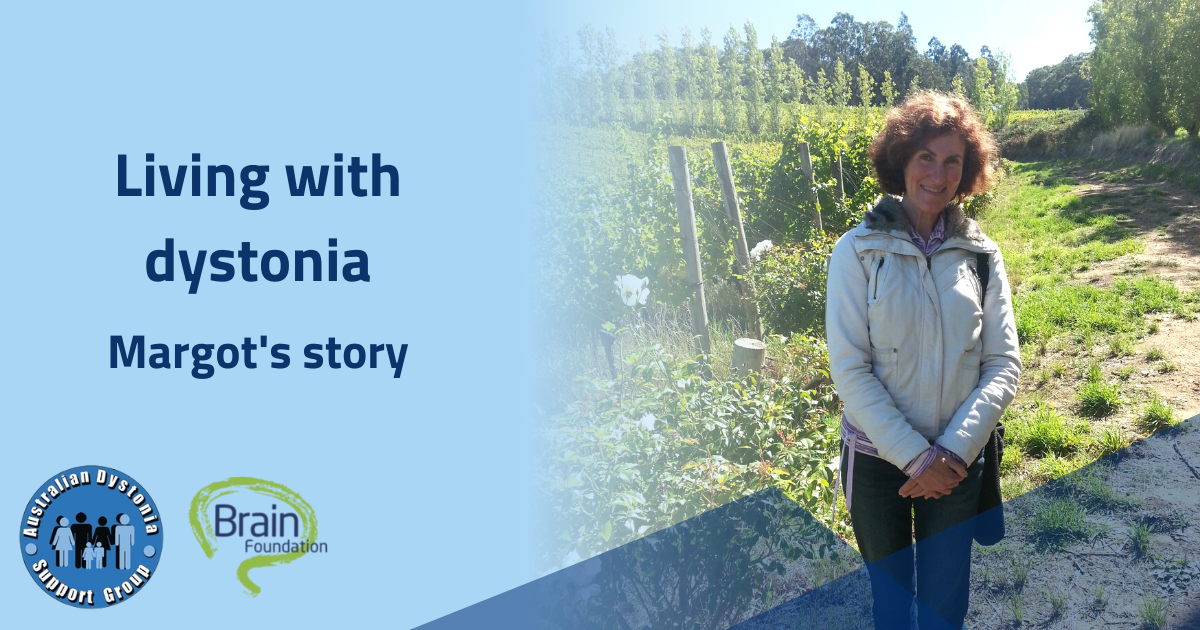
...a neurologist. The neurologist finally diagnosed me with cervical dystonia, an involuntary movement disorder caused by incorrect signals from the brain. This was a great relief to know what was...
...using a technique to image brain activity at very fine-grained detail, known as two-photon calcium imaging, and a model of the brain grown in a dish, known as a brain...
...use of NiBS is thought to promote the functional reorganisation of local and diffuse patterns of communications between brain regions (i.e. stimulation promotes better whole-brain connectivity). Such brain stimulation methods...
...that contribute to the disease. A major contributor to the spread of Parkinson’s disease throughout the brain is the transmission of an abnormally folded protein called alpha synuclein from brain...
...Andy’s story about her experience with aneurysm. Brain Injury Australia – BIA provides resources and support services for people living with brain injury (including aneurysm/SAH). Brain Aneurysm Foundation USA –...
...organs, including the skin, kidneys, heart, liver and lungs. These growths begin to form in the brain prior to birth and can interfere with brain functioning. They can cause seizures,...
What is aphasia? Aphasia is a neurological disorder caused by damage to the portions of the brain that are responsible for language. For most people, these are parts of the...
...surface of the brain and spinal cord, and then is absorbed into the bloodstream. CSF aids in delivering nutrients to the brain and removing waste, keeping brain tissue buoyant and...
Established in 1970 by an eminent group of neurologists and neurosurgeons, the Brain Foundation remains dedicated to funding neurological and neuroscientific research in Australia. Mission The Brain Foundation is dedicated...
The Brain Foundation is dedicated to funding the next generation of Australian research into brain disorders, diseases, and injuries, with the ultimate goal of advancing diagnoses, treatments, and patient outcomes.










 The Brain Foundation is dedicated to funding the next generation of Australian research into brain disorders, diseases, and injuries, with the ultimate goal of advancing diagnoses, treatments, and patient outcomes.